
Short answer
A home EV charger in the Klang Valley typically costs RM2,800 – RM6,250 all-in with a 7kW wallbox, or RM1,800 – RM2,800 for our wiring and installation if you already have the charger. For daily charging it should be a Mode 3 wallbox on its own circuit with RCD protection.
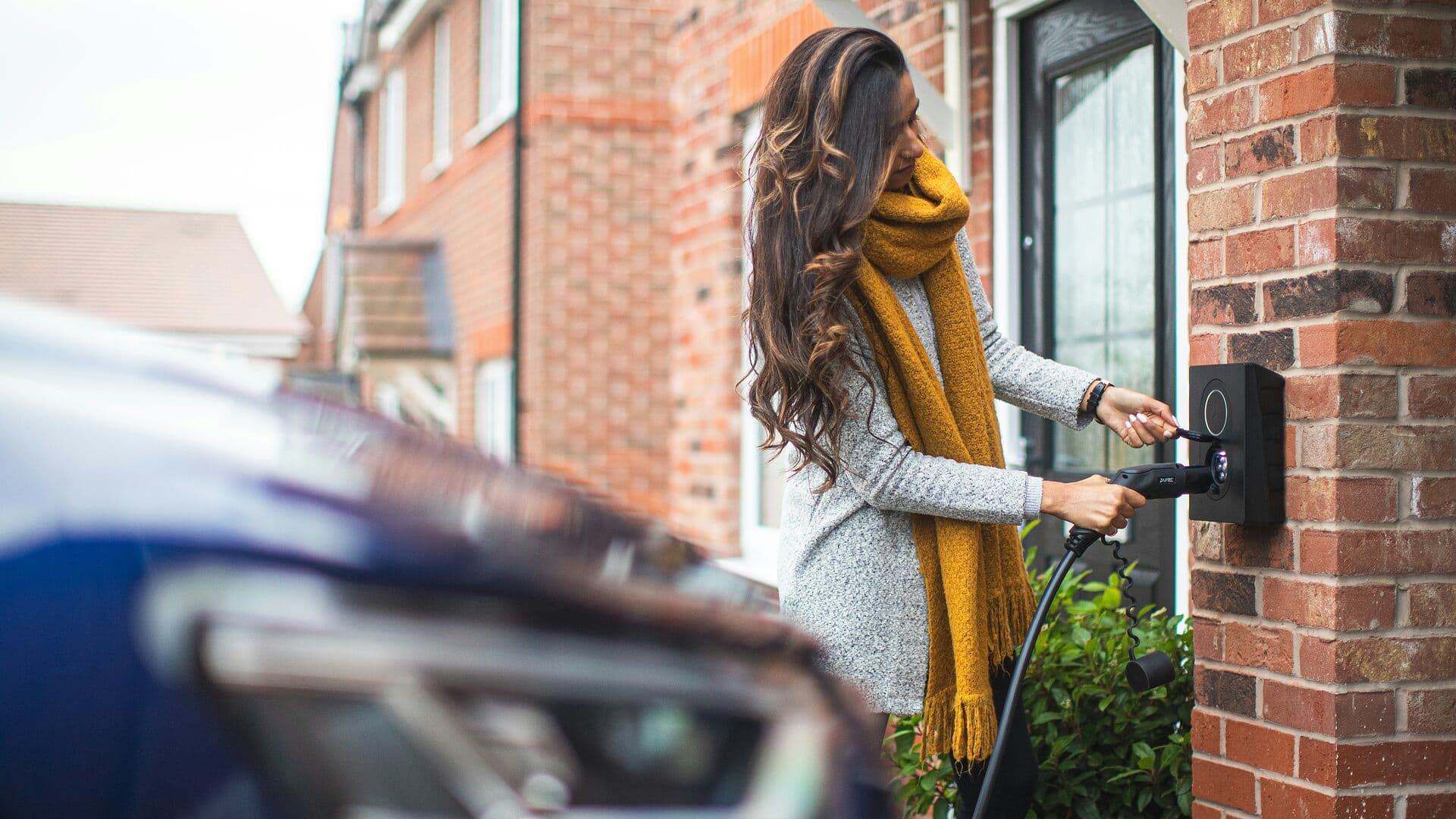
How much does home EV charger installation cost?
The total depends on the charger you buy, the distance from your DB box to the parking spot, and whether your supply can take the extra load. For a landed house with a single-phase 7kW wallbox and a reasonable cable run, most owners spend RM2,800 – RM6,250 including the charger itself.
Our RM1,800 – RM2,800 covers a dedicated circuit from the DB box, correctly sized cable, RCD protection, an isolator, mounting the wallbox, testing and a test charge with your car. If your car dealer offers free installation, check exactly what it includes before you pay for anything twice.
| Setup | Market range | My Power Care KL |
|---|---|---|
| Labour and wiring only (your charger, landed) | RM800 – RM2,500 | RM1,800 – RM2,800 |
| All-in with 7kW charger (landed) | RM2,800 – RM6,250 | RM1,800 – RM2,800 plus charger at cost |
| Condo, with TNB sub-meter | RM4,500 – RM8,000 | Quoted after site visit |
| Single to 3-phase upgrade (if needed) | RM3,000 – RM10,000 | RM5,000 – RM8,000 excl. TNB fees |
Single-phase 7kW or 3-phase 11kW or 22kW: which do you need?
A 7kW charger runs on single-phase supply and adds roughly 35–45km of range per hour. Plugged in overnight, that fully charges most EVs, which is why it suits the majority of homes. An 11kW or 22kW charger needs 3-phase supply, which most terrace houses and condo units do not have.
Check your car's onboard AC charger before paying for a bigger wallbox. Many popular EVs accept only 7kW or 11kW on AC, so a 22kW unit will not charge them any faster. If your house already runs several aircons and instant heaters, we check the load first; the answer may be a 3-phase upgrade or a charger with load management.
| Charger | Supply needed | Approx. range added per hour | Best for |
|---|---|---|---|
| 7kW | Single-phase, 32A | 35–45km | Most homes, overnight charging |
| 11kW | 3-phase, 16A per phase | 60–70km | 3-phase landed homes |
| 22kW | 3-phase, 32A per phase | Limited by the car's onboard charger | Cars that accept 22kW on AC |
What do the EV charging guidelines require?
Suruhanjaya Tenaga's Guidelines for Electric Vehicle Charging Systems (EVCS), issued in February 2025, set the rules for home charging. In short, daily charging should use a Mode 3 wallbox on its own circuit with RCD protection, and the installation should be tested before use.
The portable cable that comes with many EVs is for occasional use. Drawing 10A or more through a household 13A socket for eight hours every night overheats sockets and plugs. Most wallboxes have built-in DC leakage detection, which is why a Type A RCD is enough; without it, a Type B RCD is needed.
- A Mode 3 wallbox on its own dedicated circuit
- No regular daily charging from a plain 13A socket
- RCD protection of 30mA, minimum Type A
- Insulation, earthing and RCD tests before first use
How is a condo installation different from a landed house?
In a landed house, the job is straightforward: we run a dedicated circuit from your DB box to the porch, usually in a day. In a condo, the cable has to cross common property to reach your parking bay, so you need written approval from the JMB or MC under the Strata Management Act 2013 and the building's by-laws.
Some buildings require a separate TNB sub-meter for each EV bay, or use a shared charging system run by an operator. Expect to submit drawings, the charger's specifications and contractor details to the management office. Approval can take several weeks, so start before the car arrives. Condo installations with a sub-meter typically cost RM4,500 – RM8,000.
What is the installation process, step by step?
For a landed house, these steps usually take one short site visit and one installation day, about a week apart. Condo timing depends on how quickly the management office replies. If your DB box is old or already full, we may recommend replacing it during the same visit rather than squeezing in another breaker.
- 1. Site survey: check the main supply, DB box capacity and cable route
- 2. Choose the charger: a 7kW single-phase wallbox suits most homes
- 3. Approvals: JMB or MC approval for condos, plus any TNB sub-meter application
- 4. Installation: dedicated circuit, cable, RCD, isolator and wallbox
- 5. Testing: insulation, earthing and RCD tests
- 6. Commissioning: a test charge with your car and a walk-through of the app
Can you claim tax relief on a home EV charger?
Yes. Malaysia gives individual income tax relief of up to RM2,500 for expenses on EV charging facilities, which can include buying and installing a home charger. The relief has been extended to the 2027 year of assessment. Keep the invoices in your own name, and confirm the current conditions with LHDN before you file.
Some car brands and charger sellers also run installation promotions. They are worth using, but check whether the promotion covers the full cable run, the RCD and testing, or only a basic installation up to a fixed cable length, with every extra metre charged separately.