
Short answer
Your house probably needs rewiring if the wiring is 25–30 years old or more, it still has rewireable fuses or no RCCB, or you notice warm sockets, burning smells, flickering lights or frequent tripping. An inspection (RM250 – RM600 with us) tells you whether you need a full rewire or just repairs.
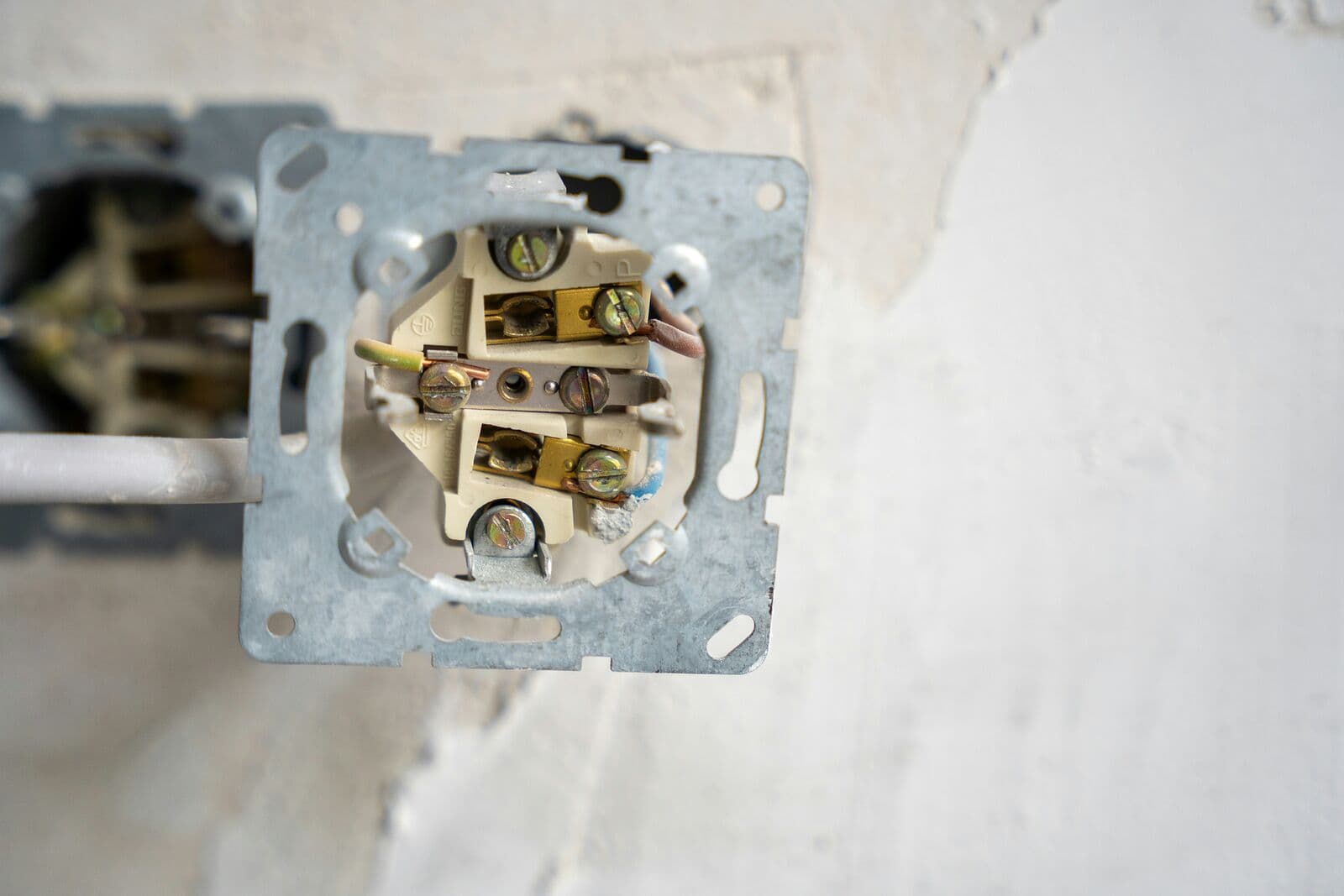
Sign 1: Is your wiring more than 25 years old?
PVC-insulated cable in a Malaysian home typically lasts 25–30 years. Heat in the roof space, humidity and decades of load slowly harden the insulation until it cracks. Many terraces in older parts of KL, PJ and Klang, built from the 1970s to the 1990s, still have original wiring designed for a few fans and a fridge, not five aircons.
Age alone does not make wiring dangerous, but it does mean it is due for testing. If you do not know when the house was last rewired, look for clues: old round-pin sockets, brown bakelite switches or a wooden board behind the meter all point to wiring from another era.
What does your DB box tell you? (Signs 2 and 3)
Sign 2 is a DB box with rewireable fuses (ceramic holders with fuse wire) or no RCCB at all. An RCCB cuts the power within a fraction of a second when current leaks to earth, which is what protects you from a fatal shock. A house without one is wired to a standard that is decades out of date.
Sign 3 is frequent tripping. The odd trip after heavy rain has simple causes, but if the RCCB trips every week, or several circuits trip, the insulation may be breaking down across the house. You can check all of this through the DB box door. Never remove the cover; leave what is behind it to an electrician.
What can you see, smell or hear? (Signs 4, 5 and 6)
These three signs mean heat is building up where it should not. Loose connections, overloaded sockets and worn insulation all produce heat long before they produce a fire. If you notice any of them, stop using that socket or switch, switch off its MCB, and have it checked soon.
A burning smell with no obvious source is the one to treat as urgent. Switch off the main switch if you can reach it safely, and call an electrician. Plastic melting inside a wall or ceiling can smoulder for hours before you see any smoke.
- Sign 4: warm or discoloured sockets and switches, with brown or black marks around the pins
- Sign 5: a burning or fishy smell near sockets, switches, the DB box or the ceiling
- Sign 6: buzzing, crackling or sizzling from switches, sockets or the DB box
Why do lights flicker and cables crack? (Signs 7 and 8)
Sign 7 is lights that flicker or dim, especially when an aircond, iron or water heater switches on. A faulty LED driver can make one light flicker, but if it happens across several rooms, it usually points to loose connections or undersized cable struggling with the load.
Sign 8 is the cable itself. Electricians often find cracked, crumbling PVC insulation behind old switch plates and in the roof space, and some older houses still have aluminium cable, which loosens at terminals over time. Cracked insulation exposes live conductors. Do not unscrew switch plates to check yourself; that is the electrician's job.
Are you living on extension cords? (Sign 9)
Sign 9 is a house that simply does not have enough sockets. Older homes were wired with two or three sockets per room. Today the same room has a TV, router, phone chargers, an aircond and maybe a home office, so families end up with multi-plug adaptors and extension cords running everywhere.
Extension cords are fine for short-term use, but chained adaptors and cords under carpets overheat. If you rely on them permanently, adding proper points is safer. A new surface-trunking socket costs RM150 – RM250 with us; if you need many, a partial or full rewire is often better value.
How common are electrical house fires in Malaysia?
BOMBA (the Fire and Rescue Department) reports that about 60% of house fires in Malaysia are caused by electrical faults. Between January and September 2024, 3,172 residential fires were electrical, around 63% of all residential fires in that period. Old wiring, overloaded sockets and poor-quality repairs are common factors.
Most of these fires start from faults that gave warning signs first: a warm socket, a strange smell, tripping that got ignored. That is why we recommend a professional inspection every 10–15 years, and sooner if you have just bought an older house or are planning a renovation with new heavy appliances.
Do you need an inspection or a full rewire?
Start with an inspection unless the wiring is obviously failing. An inspection tests insulation resistance and RCCB trip time, checks earthing, the DB box and the points, and gives you a written report. It often shows that only part of the house needs work, which costs far less than a full rewire.
| Option | When it makes sense | My Power Care KL |
|---|---|---|
| Safety inspection, condo | Older unit, new purchase, before renovation | RM250 – RM350 |
| Safety inspection, landed | Older house, new purchase, before renovation | RM350 – RM600 |
| Partial rewiring (one room) | One area failing, the rest tests well | RM1,000 – RM2,500 |
| Full rewiring, condo (2–3 bed) | Wiring 25+ years old or failing tests | RM6,000 – RM10,000 |
| Full rewiring, single-storey terrace | Wiring 25+ years old or failing tests | RM8,000 – RM13,000 |
| Full rewiring, double-storey terrace | Wiring 25+ years old or failing tests | RM13,000 – RM20,000 |